Much is already in place – you replace the stove.
You already heat with wood via the heating water. When replacing it with the LUVANO®, you keep using what works properly and check the rest in six steps.
You heat with a wood-burning boiler stove – often also called a wood stove with heat exchanger – perhaps with a water jacket, and would like to replace it. That gives you a head start: much of what a boiler stove needs is already in your house – a buffer tank, pipes to the heating system, a connection to cold water and a drain, a chimney. Replacing it therefore comes down to two questions: what can stay, and what has to fit the new stove?
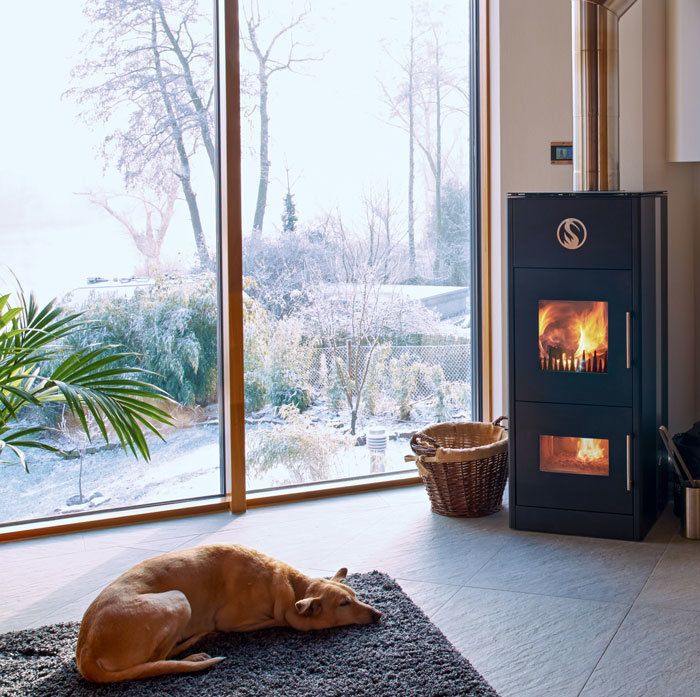
With the LUVANO®, a third question comes into play: where the heat goes. The LUVANO® boiler stove is built like a basement boiler with viewing windows. That is why it transfers up to 85 per cent of its output to the heating water and only just under 15 per cent to the room. With only just under 15 per cent, overheating of the room where the stove is installed is significantly reduced, and you can light the fire throughout the entire heating season.
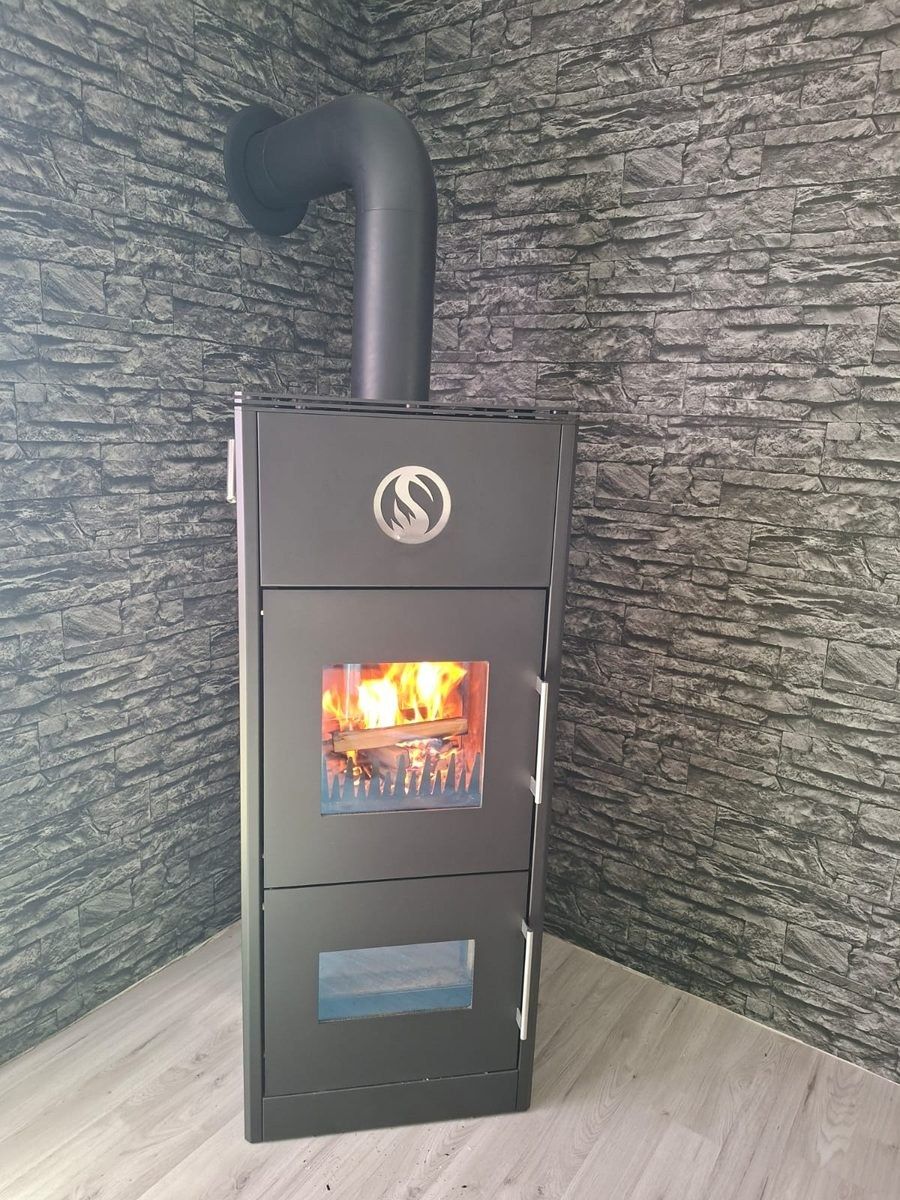
Every boiler stove needs a buffer tank – the Verbraucherzentrale (German consumer advice centre) writes that it is necessary “in any case”. You can continue to use this and other equipment if it works properly.
One exception is the control unit. Anyone who previously had a boiler stove usually already has one. If you opt for the LUVANO® TOUCH, we nevertheless recommend the LUVANO® electronics. They control the combustion air and hold back your second heat source as long as the LUVANO® is burning or the buffer tank is charged. You will find more details in the planning documents. → Request planning documents
Use the steps as a checklist for your own system.
1. Take stock. Look at what you have today: how large is your buffer tank – the volume is on the rating plate? Where and at what height are the connections of the old stove? Is there return temperature control and a connection to cold water and a drain? And does it all work properly?
2. Check the buffer tank. Is the volume sufficient – at least 500 litres? If a second heat source keeps the tank warm, the wood still needs room: the LUVANO® TOUCH shows on its display how much wood the tank can still take – in kilograms. → Buffer tank
3. Check the chimney. The LUVANO® needs a 150mm flue connection. In many cases, a chimney from 5 metres in length, preferably from 6 metres, with a diameter of 150 to 180mm is suitable. Since 2022, requirements for the height of the chimney outlet have also applied when replacing a solid fuel appliance. → Which chimney?
4. Clarify installation and connections. The LUVANO® measures H 1,325 × W 550 × D 550mm, 1,370mm with flue pipe, and weighs just under 400kg with water. The floor must be level and load-bearing, and non-combustible in front of the stove. Nothing combustible may be placed within 80cm in front of the glass panels; 5cm is sufficient at the sides. With a rear connection, at least 15cm is needed so that all components remain accessible. Water, electricity and air are connected at the rear or bottom, the flue gas always at the top. If the position or height of your existing pipes does not fit, a plinth takes the pipes – we can supply a suitable plinth for the LUVANO®.
5. Involve the chimney sweep early. Involve your chimney sweep early enough: they can give you reliable information about the installation and the chimney.
6. Installation, approval and first fire. Your heating installer installs the LUVANO®; we will gladly provide you and your heating engineer with suitable hydraulic diagrams and suggestions for integration. Before the first fire, the chimney sweep determines whether everything is in order. During the test firing, all control and safety devices are set and checked, and you are shown how to operate the stove.
Anyone replacing a boiler stove already has much of what is needed in the house. The buffer tank, return temperature control, cold water and drain as well as the heating circuit mixing valves can stay if they work properly. What needs to be checked are the tank size, chimney, installation location and connections; if the connections do not fit, a plinth helps. The LUVANO® transfers up to 85 per cent of its output to the heating water and only just under 15 per cent to the room.
Yes, if it works properly and is large enough: at least 500 litres, preferably 800 to 1,000 litres. → Buffer tank
It is included in the LUVANO® scope of delivery. The cold water supply and the drain continue to be used.
Often, yes. In the end it is a question of height, effective height, diameter and material. Using our survey form, we assess suitability free of charge. → Request the form
Then a plinth takes the pipes; we can supply a suitable plinth for the LUVANO®. It is connected at the rear or bottom.
As a rule, no: under the building regulations (Bauordnungen), no building permit is required to replace a combustion appliance. If in doubt, ask your chimney sweep; before the first fire, they will determine whether everything is in order anyway.
The LUVANO® itself is not eligible for funding. → Funding
In principle, the LUVANO® is a boiler stove in accordance with EN 16510 (previously EN 13240). Whether it has to be tested on a recurring basis nevertheless depends on certain circumstances. → Emission testing obligation